
Drone Crash in Assam: Eagle Attack During 360° Shoot with Insta360
Blog post description.
DRONE WITH 360
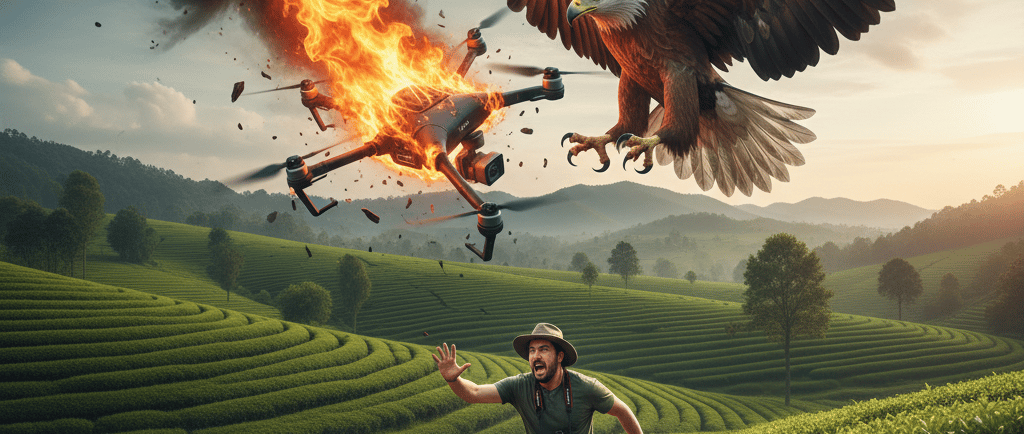
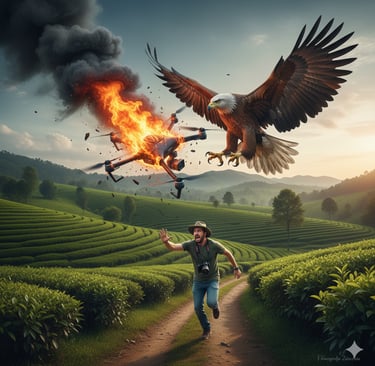
🦅 When an Eagle Brought Down My Drone: A Thrilling 360° Shoot Story from Assam
Introduction: The Day Nature Issued a Cease-and-Desist
Every project throws curveballs, but some shoots rewrite your internal rulebook. This is the story of a routine ONGC 360° shoot in the wild skies of Assam that turned into a heart-pounding emergency. It’s the tale of a majestic eagle who decided our Insta360 X4-mounted drone was an unwelcome intruder, transforming a moment of perfect cinematography into panic, loss, and ultimately, overwhelming relief.
It’s a reminder that in the high-tech world of 360° VR photography, sometimes the greatest threat comes not from software glitches, but from the raw, unpredictable power of nature.
The Journey and the Perfect Setup
Our team began the long journey from Ahmedabad, energized by the scope of the project: documenting expansive ONGC sites using the latest immersive tech. After days of travel, we settled into the beautiful, yet rugged, landscape of Assam. (Note: ONGC often utilizes technology for major projects in the region, a common practice for large-scale energy companies.)
The strategy was methodical:
Groundwork First: Capture all ground-level, intricate 360° footage using the robust Insta360 Pro2.
Skyline Second: Elevate the visuals with breathtaking aerial perspectives captured by the Insta360 X4 mounted on our trusted drone.
The first two days were flawless. We breezed through 70% of the Pro2 filming—script executed, team coordination crisp, and the natural lighting cooperated perfectly. We felt invincible.
On the third morning, the sky was a deep, inviting blue. We armed the drone, charged the batteries, and felt that unique rush of confidence. The first two aerial flights were smooth as silk, banking beautiful sweeping shots that promised a cinematic final product.
The third flight? That was the one that changed everything.
💥 The Eagle’s Strike: A Moment of Chaos
As the drone ascended, reaching its optimal altitude, I felt the familiar thrill of seeing our vision align with the technology. But then she appeared—a powerful, enormous eagle, dominating the airspace above us.
We paused, admiring her flight. But admiration quickly turned to horror. The persistent whirring sound of the propellers, an audible trespass in her territory, must have triggered an instinctual attack. Without warning, she dove—a blur of brown and razor-sharp talons aimed directly at the buzzing threat. (Note: Eagles and other birds of prey are known to attack drones, often mistaking them for rivals or prey, a common hazard in aerial cinematography.)
CRASH!
The impact was immediate and brutal. We heard the distinct snap of a propeller breaking. The drone instantly destabilized, spinning violently, its elegant flight path broken into a terrifying spiral. We watched, helplessly, as it plummeted to the earth.
When it hit the ground, the worst sound followed: a hiss, a pop, and the sight of the lithium battery bursting into flames.
It wasn't a smooth shoot anymore; it was chaos, panic, and the sudden, awful realization of a major financial and professional loss.
The Heartbreaking Race: Saving the Black Box
I was frozen for a second—my reliable drone, the product of years of savings and investment, was burning. But the panic wasn't about the metal and wires; it was about the data.
Our entire morning's work, the crucial aerial footage, and potentially, the continuity of the entire project, were stored inside the Insta360 X4's memory card. If the fire destroyed that little piece of plastic, we wouldn't just lose a drone; we'd risk losing days of work and the client’s trust. That fear hit me harder than the sight of the wreckage.
Like a pilot searching for a black box after a disaster, I sprinted toward the crash site.
The drone body was already beginning to melt.
Plastic and wires lay scattered.
Flames licked at the remnants, fueled by the battery.
Ignoring the smoke and the intense heat, my eyes searched only for the camera remains. I located the burnt shell of the Insta360 X4. My heart pounded. I tore through the pieces, ignoring a minor burn, until I saw it: the tiny memory card.
Blackened, hot, and dusted with soot—but intact. I clutched it like a winning lottery ticket.
From Despair to Deliverance: The Data is Safe
Back at the hotel, the tension was unbearable. My hands were shaking as I carefully cleaned the card. The moment of truth came when I slid it into the card reader.
I held my breath... and then, a wave of pure, unfiltered relief washed over me.
Every single file. Every shot. Safe.
We lost the drone, but we saved what mattered most: the client's valuable data and the integrity of our project. Sadness evaporated, replaced by the profound joy of recovery.
Lessons from the Skies: The Black Box Priority
That dramatic day taught us resilience, preparedness, and the ultimate hierarchy of value in visual media:
Nature Always Wins: Respect wildlife and environment. Birds, wind, and sudden weather changes are unpredictable variables that technology cannot overcome.
Data is Your Soul: The memory card is your project's black box. In any accident, its recovery must be your single, non-negotiable priority.
The Golden Rule of Media: Backup Daily. Do not rely on the end-of-project timeline. If we hadn't already backed up the ground footage, the loss would have been catastrophic.
Durability Wins: The Insta360 X4's shell, despite the fire damage and impact, protected the memory card—a testament to the surprising durability of modern action cameras.
Conclusion: The Resilience of the Creative Spirit
The eagle may have ended our flight that day, but she cemented the most crucial operational lesson we could ever learn. This story is more than just about a crash; it's about the deep-seated professional commitment to protect the client's asset above all else.
If you're ever using high-end 360° technology, remember: Find the memory card first. The drone can be replaced. The data cannot.

Experience
Engaging virtual tours for real estate and events.
Innovative
Immersive
info@360vrphotography.in
+91 9920322366